Introduction
Creating a dedicated arts and crafts playroom can transform a household space into a hub of creativity and hands-on learning. Such a room provides children with a structured environment where they can explore, experiment, and express themselves through various creative mediums. With the right planning, an arts and crafts playroom not only encourages artistic development but also promotes cognitive skills, fine motor coordination, and problem-solving abilities. For families seeking inspiration, the design and organization of this space can reflect modern trends in home decor while remaining practical for everyday use.
In this article, you will find ten actionable arts and crafts playroom ideas that balance functionality, aesthetics, and creativity. Each idea includes a clear explanation of the concept and a step-by-step guide on how to implement it, making the ideas beginner friendly. Readers will learn how to organize materials, create engaging activity zones, and incorporate decorative elements that enhance both usability and visual appeal. By the end of the guide, you will have a comprehensive understanding of how to design a playful, organized, and inspiring arts and crafts space that encourages imaginative exploration while remaining easy to maintain.
Why This Idea Is Trending or Useful
Arts and crafts playrooms have gained significant popularity because they combine educational value with modern interior design. On Pinterest, these spaces are among the trending ideas for families who want a designated creative area for children that is visually appealing and functional. The appeal lies in the ability to transform a simple room into a multi-purpose area where children can engage in DIY projects, organize materials efficiently, and display their artwork. This setup promotes independence and responsibility, as children learn to manage their own creative tools and supplies.
The trend also reflects a growing interest in minimalist style and aesthetic organization, making playrooms visually pleasing while avoiding clutter. Homeowners are increasingly looking for budget ideas that maximize available space without requiring extensive renovations. DIY tutorials and step-by-step guides on Pinterest make it accessible for beginners to recreate professional-looking playrooms at home. Beyond design, these spaces provide practical benefits by encouraging consistent artistic engagement, fostering structured play, and offering a retreat where children can focus on creative projects in a safe and supportive environment.
Materials and Preparation
Before designing an arts and crafts playroom, preparation is essential for efficiency and long-term usability. Start by identifying the materials and tools that will be regularly used in the space. Common items include colored pencils, markers, paints, brushes, glue, scissors, paper, craft kits, and modeling clay. Storage solutions such as bins, shelves, and drawers should be selected based on ease of access and child safety. Durable, easy-to-clean surfaces are recommended for tables and floors to withstand spills and heavy use.
Next, consider planning steps. Assess the available space and designate specific zones for different activities, such as painting, crafting, and building projects. Measure furniture placement to ensure sufficient room for movement. Preparing a supply inventory can prevent duplication and allow for organized restocking. Child-friendly considerations, such as rounded table edges and non-toxic materials, should be prioritized. Establishing a clean-up routine and labeling storage areas before starting projects ensures smooth daily use. Thoughtful preparation not only enhances the playroom’s functionality but also simplifies future updates and seasonal creative changes.
Idea 1: Modular Craft Station
How to Create
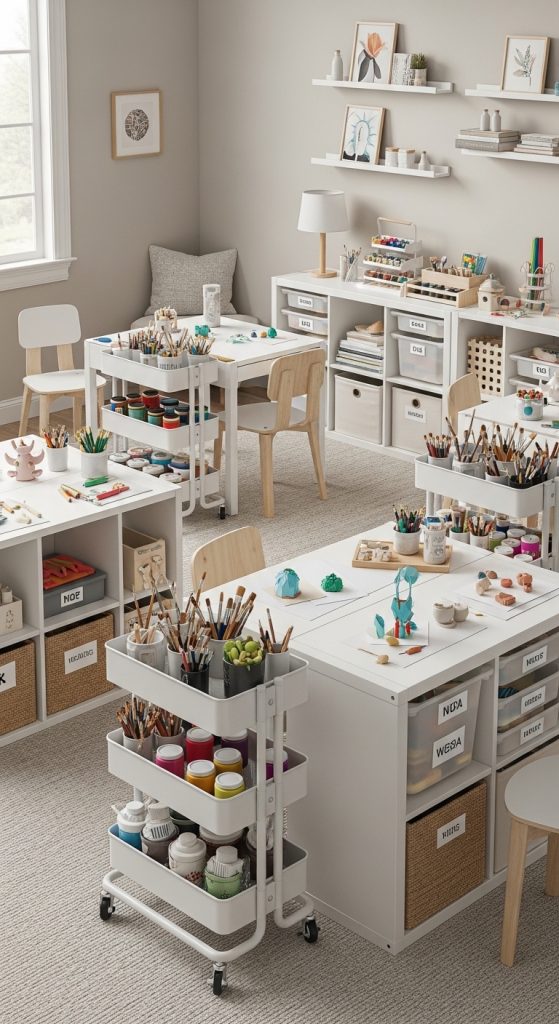
A modular craft station is a flexible setup that can adapt to various projects and storage needs. The concept involves creating separate work zones that can be rearranged as needed, combining tables, rolling carts, and cubbies. This approach allows children to move materials and tools closer to the activity they are working on, promoting efficiency and organization. Modular stations are particularly suited for homes with limited space, as individual components can be repositioned to suit changing needs. The aesthetic can be customized with colorful bins or a minimalist style for a modern look, providing both functional storage and visual appeal.
The setup process begins by selecting a main work surface, such as a small table or bench, and adding modular components around it. Rolling carts with bins can hold paints, brushes, and craft kits, while stackable cubbies provide additional storage for paper, fabric, and modeling clay. Attach labels to each container to ensure materials are easily accessible. Encourage children to participate in arranging their craft station, allowing them to make decisions on placement. Regularly rotate materials between carts and shelves to maintain engagement and prevent boredom. This setup is beginner friendly and allows for continuous creative exploration without clutter.