Blue bathroom design focuses on creating a calm, balanced, and visually refreshing space using different shades of blue combined with complementary neutrals. This style is widely featured in Pinterest ideas because it brings a sense of cleanliness, relaxation, and structure to bathroom interiors. A cozy blue bathroom blends modern design principles with soft color layering to create a space that feels both functional and visually soothing. The use of blue tones can range from deep navy accents to light pastel shades, allowing flexibility in mood and spatial perception. This article presents ten practical and beginner friendly ideas for designing a cozy blue bathroom using structured layouts, thoughtful material selection, and simple decoration techniques. Each idea focuses on improving organization, lighting balance, texture layering, and overall aesthetic harmony. Readers will learn how to combine blue color schemes with minimalist style and modern home decor principles while maintaining functionality. These ideas are suitable for small bathrooms, budget projects, and DIY home upgrades where visual impact and practicality must work together.
Why This Idea Is Trending or Useful
Blue bathroom designs are trending because they offer a timeless and adaptable color foundation that works well in both modern and traditional interiors. This color is widely used in Pinterest ideas due to its association with calmness, water elements, and cleanliness. It is useful because it can be applied in multiple ways, from subtle accents to full wall coverage, without overwhelming the space. Blue tones pair easily with white, gray, wood, and metallic finishes, making them highly versatile in home decor planning. DIY bathroom projects often use blue themes because they allow simple transformations through paint, textiles, and decorative accessories. This design approach also supports organization by visually separating zones within the bathroom while maintaining a cohesive aesthetic. The popularity of blue bathrooms is further strengthened by their ability to enhance lighting effects and create a sense of depth in small spaces. Combined with minimalist style principles and budget ideas, blue bathroom designs remain a consistent and practical choice for creative home improvement projects.
Materials and Preparation
Before starting a blue bathroom design project, careful preparation ensures balanced color application and functional layout planning. Essential materials include blue paint or tiles in different shades, white or neutral base surfaces, ceramic fixtures, mirrors, storage units, towels, baskets, and decorative accents. Additional materials may include glass elements, metal fixtures, and soft textiles for layering. Tools required include measuring tape, level, drill, adhesive materials, cleaning supplies, and paint tools if surface customization is involved. Preparation begins with analyzing the bathroom layout to determine where blue tones will be applied. A clear color strategy should be established, often using light blue for walls and darker shades for accents or focal points. Planning also includes identifying storage zones and ensuring that decorative elements do not disrupt functionality. Surface preparation is essential for paint or tile application to ensure durability and smooth finish. Organizing the workspace and removing unnecessary items helps maintain clarity during the design process. Proper preparation ensures that each element contributes to a cohesive, visually balanced, and functional bathroom environment.
Idea 1: Soft Blue Gradient Wall Design
How to Create
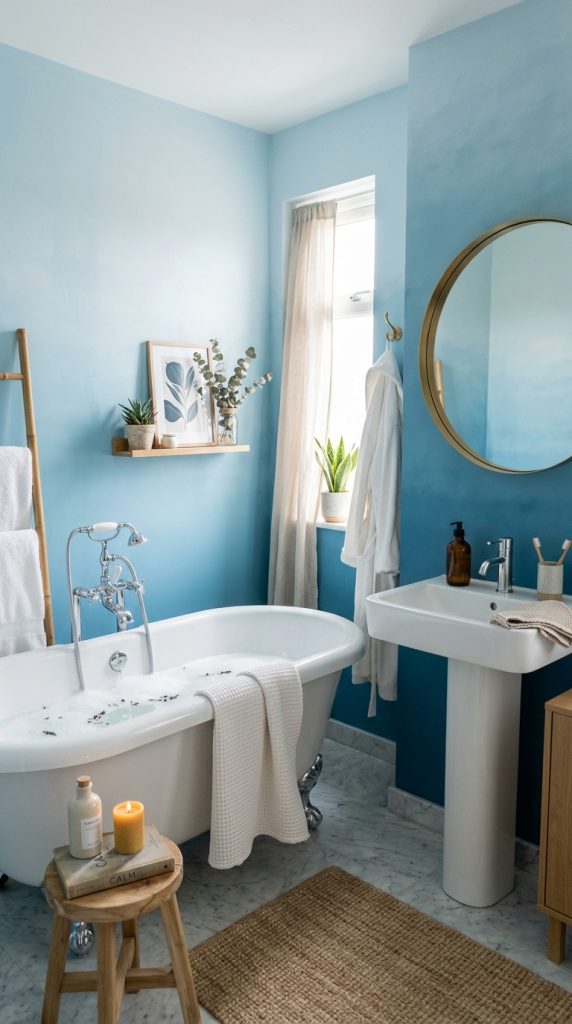
A soft blue gradient wall design introduces a smooth transition of blue tones across bathroom walls to create depth and visual calmness. This concept is commonly featured in Pinterest ideas because it enhances atmosphere without requiring complex decoration. The gradient effect can range from pale sky blue at the top to deeper navy tones at the bottom, creating a natural flow that mimics water-inspired themes. This design supports modern design and minimalist style principles by maintaining simplicity while adding visual interest. It is particularly effective in small bathrooms where depth perception is important. The gradient effect also improves lighting reflection, making the space feel larger and more open. This idea focuses on controlled color blending rather than sharp contrast, resulting in a soft and cohesive environment.
To create this effect, start by preparing clean and smooth wall surfaces. Apply a base coat of the lightest blue shade. Gradually blend darker tones downward using sponge or roller techniques. Maintain even transitions to avoid harsh lines. Allow each layer to dry before applying the next. Keep surrounding fixtures neutral to maintain balance. This step by step tutorial approach ensures a smooth and visually appealing finish suitable for beginner friendly DIY projects.