Modern Mexican decor blends traditional Mexican artistry with contemporary design principles, creating vibrant and inviting spaces that are both functional and aesthetically pleasing. This style draws inspiration from colorful textiles, handcrafted ceramics, natural materials, and cultural motifs, while maintaining clean lines and a minimalist approach suited to modern living. By integrating these elements thoughtfully, it is possible to create a home environment that feels both warm and sophisticated. In this guide, readers will discover ten practical ideas to incorporate modern Mexican decor into various rooms, from living areas to kitchens and bedrooms. Each idea focuses on actionable steps, materials, and design strategies, ensuring that even beginners can implement them successfully. This article also addresses preparation, common mistakes, and advanced creative expansions to help homeowners personalize their space. The goal is to provide a resource that blends inspiration with practicality, allowing readers to enhance their interiors while honoring the rich cultural heritage of Mexican design. Following these ideas will equip readers with the knowledge to create cohesive, modern interiors that celebrate texture, color, and craftsmanship while remaining accessible and functional for everyday use.
Why This Idea Is Trending or Useful
Modern Mexican decor has gained popularity for its versatility and visual impact. Unlike traditional decor styles that can feel heavy or rigid, this aesthetic combines bold colors, organic textures, and handcrafted elements with clean, contemporary forms. On Pinterest, these spaces are celebrated for their eye-catching balance of vibrant textiles, natural materials like wood and clay, and functional furniture. The practical value lies in how these design choices improve everyday living: open layouts, ergonomic furniture, and multifunctional storage solutions can be integrated seamlessly into a Mexican-inspired home. DIY enthusiasts are drawn to this trend because many elements, such as woven wall hangings, pottery, and simple textile patterns, can be handmade or customized to suit personal taste. Additionally, the accessibility of this style makes it beginner friendly. You can start with small accents, such as colorful throw pillows or hand-painted tiles, and gradually expand to larger installations. The combination of aesthetic appeal and practical adaptability has made modern Mexican decor a trending idea for those seeking a creative, lively, and functional home environment.
Materials and Preparation
Before starting any modern Mexican decor project, careful planning and preparation are essential. First, gather materials commonly used in this style, including natural wood, woven textiles, ceramic tiles, terracotta, leather, and metal accents. Color palettes typically feature warm earth tones, vibrant blues, reds, and yellows, so consider sourcing paints or fabrics in these shades. Tools for installation or crafting may include basic hand tools, sewing supplies, brushes, or adhesive materials, depending on the chosen project. Preparation also involves evaluating your available space and layout, ensuring that furniture, artwork, and decorative items will complement rather than overcrowd the room. Sketching a floor plan or mood board can help visualize the integration of different textures, patterns, and colors. Planning should also account for lighting, as natural light enhances the vibrancy of Mexican textiles and ceramics, while strategically placed artificial lighting can create warmth and highlight handcrafted pieces. With materials collected, tools ready, and a clear plan in place, execution becomes more straightforward, ensuring that each project is both achievable and visually cohesive.
Idea 1: Vibrant Handwoven Wall Hangings
How to Create
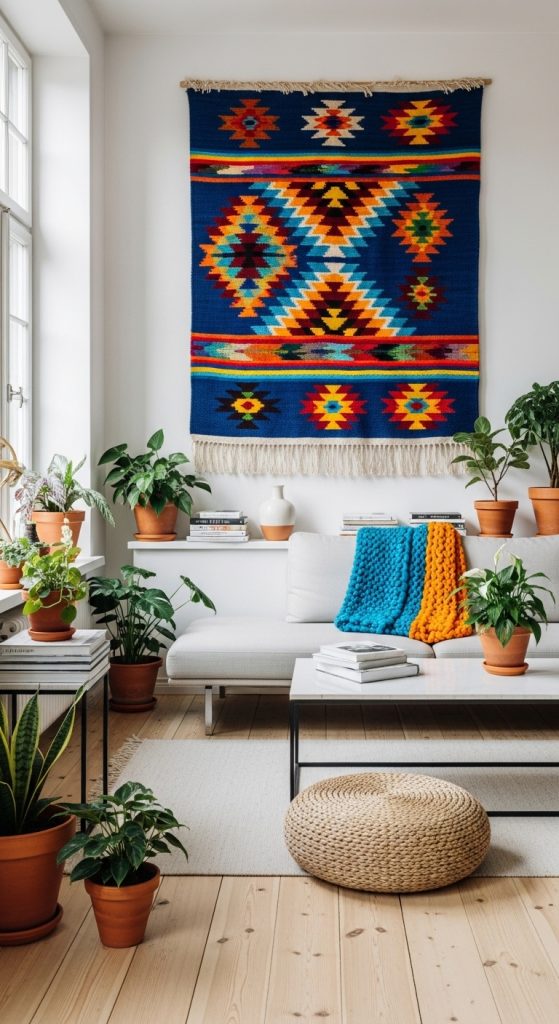
Handwoven wall hangings are a hallmark of Mexican decor and a versatile way to introduce texture and color into a modern space. These pieces typically feature geometric patterns, stripes, or cultural motifs that reflect Mexican artistry. Modern adaptations use minimalist frameworks or subtle palettes to maintain clean lines while preserving traditional vibrancy. In addition to aesthetic value, wall hangings can function as sound absorbers or room dividers, making them practical additions to a home. They can be displayed individually or layered for a gallery-like effect, providing flexibility in arrangement. When incorporated into living rooms, bedrooms, or hallways, they serve as focal points that elevate overall decor. Materials such as cotton, wool, or recycled fibers are commonly used, and experimenting with thread thickness or dyeing techniques can yield unique textures and tonal variations. The key to a successful installation is balance: ensuring that the wall hanging complements existing furniture, lighting, and other decor elements while maintaining its prominence.
Step-by-Step Guide
To create a vibrant handwoven wall hanging, first gather materials: yarn in desired colors, a wooden dowel or frame, weaving needles, and scissors. Begin by securing the yarn onto the dowel as a base warp. Use a simple over-under weaving technique to introduce patterns and layers of color. Gradually incorporate different textures, such as thicker yarn or metallic threads, to create depth and dimension. If desired, fringe or tassels can be added at the bottom to enhance movement. Once the weaving is complete, trim excess threads and secure loose ends with knots or glue. Attach the finished piece to the wall using hooks or brackets that support its weight. Regular dusting or light vacuuming ensures longevity, while occasional color touch-ups or washing preserves vibrancy. This DIY project allows homeowners to craft a statement piece that merges traditional Mexican weaving techniques with a modern, minimalist presentation, making it a practical and visually impactful decorative element.