Under-stair spaces are often overlooked in home design, yet they provide one of the most efficient opportunities for creating a dedicated reading environment. A well-designed reading nook under stairs transforms unused square footage into a focused relaxation zone. It combines comfort, lighting, storage, and aesthetic balance in a compact footprint. On Pinterest, under-stair reading spaces appear frequently in modern home decor inspiration because they merge practicality with visual appeal. This article explores structured and realistic ways to design reading nooks under stairs using functional planning and accessible design methods. Each idea focuses on creating usable spaces suitable for homes of different sizes, from apartments to multi-level houses. The content highlights layout techniques, material selection, and styling principles that support comfort and organization. Readers will learn how to convert tight architectural areas into purposeful reading environments that support calm routines, efficient storage, and cohesive interior design aligned with modern minimalist and cozy home decor approaches.
Why This Idea Is Trending or Useful
Reading nooks under stairs are trending in Pinterest ideas because they maximize space efficiency in modern homes where square footage is limited. Many homeowners prioritize multifunctional areas that combine comfort and storage without requiring additional rooms. The under-stair zone naturally forms a semi-enclosed structure, making it ideal for a private reading corner. This design approach supports DIY home decor projects because it does not require structural changes, only thoughtful planning and simple materials. It also aligns with minimalist style principles, focusing on essential elements such as seating, lighting, and shelving. The popularity of these designs also comes from their adaptability. They can be built using budget ideas or upgraded into modern design features with built-in cabinetry. For beginners, this type of creative project is accessible because it allows gradual customization. As a result, under-stair reading nooks remain a strong source of inspiration for functional and aesthetic home organization.
Materials and Preparation
Creating a reading nook under stairs requires careful preparation to ensure comfort and functionality. The essential materials include wood panels or MDF boards for seating structures, cushions or upholstery foam for comfort, wall paint or wallpaper for visual enhancement, and LED strip lighting for soft illumination. Storage elements such as floating shelves or built-in drawers help maintain organization. Tools required typically include a measuring tape, drill, saw, level tool, screws, wall anchors, and adhesive materials for finishing work. Preparation begins with measuring the full under-stair dimensions, including height, depth, and slope angle. This ensures accurate fitting of furniture and storage units. Planning also involves identifying electrical access points if lighting installation is required. Surface preparation includes cleaning the wall area, checking for moisture, and ensuring structural stability. Design planning should focus on balancing seating space with storage needs while maintaining clear movement flow. This stage ensures the reading nook remains practical, safe, and visually aligned with overall home decor.
Idea 1: Minimal Built-In Reading Alcove
How to Create
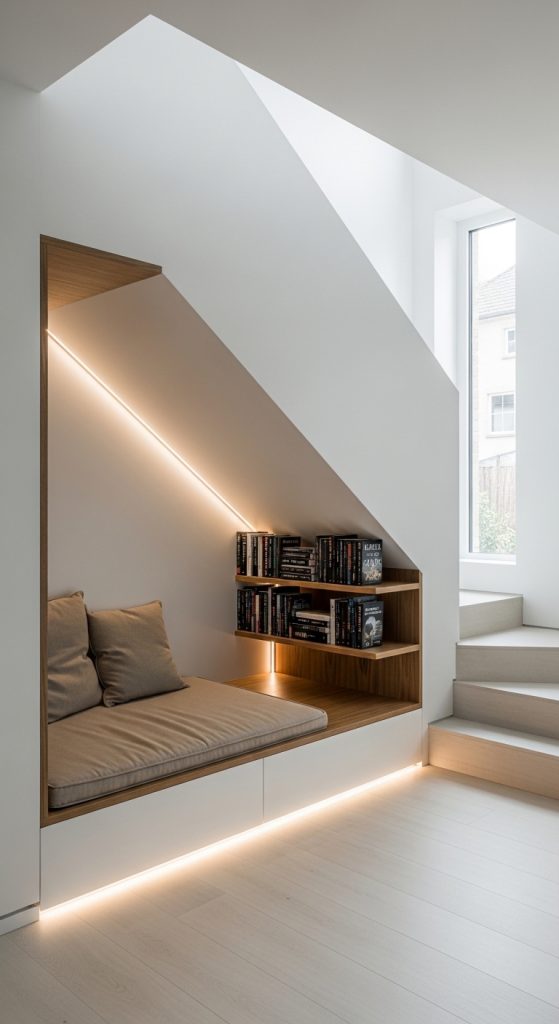
A minimal built-in reading alcove under stairs focuses on integrating seating directly into the architectural structure. This design creates a seamless visual connection between the staircase and the reading area. It is based on minimalist style principles, where unnecessary elements are removed to emphasize simplicity and function. The seating is typically constructed as a fixed platform that fits precisely into the under-stair angle. Soft neutral tones such as white, beige, or light gray enhance brightness in small spaces. Wall surfaces remain clean and uncluttered, often paired with a single floating shelf for books. Lighting is essential in this concept, with soft warm LED strips installed along the edges to create a calm reading atmosphere. This setup is ideal for modern home decor because it maintains visual consistency while transforming unused space into a purposeful zone. It also works well in both small apartments and larger homes, making it a versatile Pinterest ideas concept.
The construction process begins with accurate measurement of the under-stair cavity to ensure proper fit. A wooden base frame is installed first, followed by reinforcement for weight support. Foam padding is added on top for seating comfort, covered with durable fabric or upholstery material. Wall finishing includes painting in light tones or applying textured wallpaper for subtle depth. Shelving units are installed at reachable height for book storage and decoration. LED lighting is placed underneath the stair slope or behind panels for indirect illumination. The final step involves arranging cushions and minimal decorative items such as a small plant or reading lamp. This step-by-step tutorial approach ensures a beginner friendly execution process that results in a functional and aesthetically balanced reading nook suitable for everyday use.