A reading nook designed with natural light creates a dedicated space for focus, relaxation, and daily reading habits. The concept of “10 Reading Nook Ideas With Natural Light” focuses on arranging seating, lighting direction, and layout around windows, skylights, and open spaces to maximize daylight exposure. This approach is widely featured in Pinterest ideas because it combines comfort with practical interior design planning. Natural light enhances visibility, reduces reliance on artificial lighting during daytime hours, and supports a calm visual environment that feels open and balanced.
In this guide, the focus is on structured reading nook designs that can be adapted to different home sizes, including apartments, bedrooms, and living rooms. Each idea explains how to position furniture, select materials, and organize space for functional use. Readers will learn how to design beginner friendly setups using clear layout principles and simple materials. The goal is to provide actionable creative ideas that support home decor planning while maintaining a modern and minimal aesthetic suitable for everyday reading use.
Why This Idea Is Trending or Useful
Reading nooks with natural light are trending because they align with practical living spaces that prioritize comfort and efficiency. Modern interior design emphasizes multifunctional zones, and a reading nook is an easy project that requires minimal structural change. Natural lighting improves usability during daytime reading and enhances the visual clarity of books, digital devices, and decorative elements. This makes the setup both functional and visually appealing in home decor planning.
The design relevance comes from minimalist and modern design preferences that focus on open space, soft textures, and natural materials. DIY home improvements are increasingly popular because they allow personalization without large renovation costs. A window-based reading corner also fits small space organization needs, making it accessible for apartments and compact rooms. This combination of practicality, aesthetic balance, and beginner friendly setup is why these ideas frequently appear in trending Pinterest inspiration boards and creative project collections.
Materials and Preparation
Creating a reading nook with natural light requires a combination of basic furniture pieces and supportive decor elements. Common materials include a comfortable chair or bench seating, a small side table, cushions, and soft textiles such as throws or seat pads. For structural setups, wood panels or built-in seating materials may be used depending on design complexity. Light-filtering curtains or blinds are also important for controlling brightness while maintaining natural illumination.
Tools depend on the level of customization. Basic setups require no tools, while DIY bench seating may require a drill, screws, measuring tape, and wall anchors. Preparation includes selecting the best light source in the room, usually a large window or corner exposure. Planning considerations involve measuring available space, identifying seating placement, and ensuring clear walking paths. A well-prepared layout improves organization and ensures the reading nook functions as both a decorative and practical creative space.
Idea 1: Window Bench Reading Nook with Soft Layered Seating
How to Create
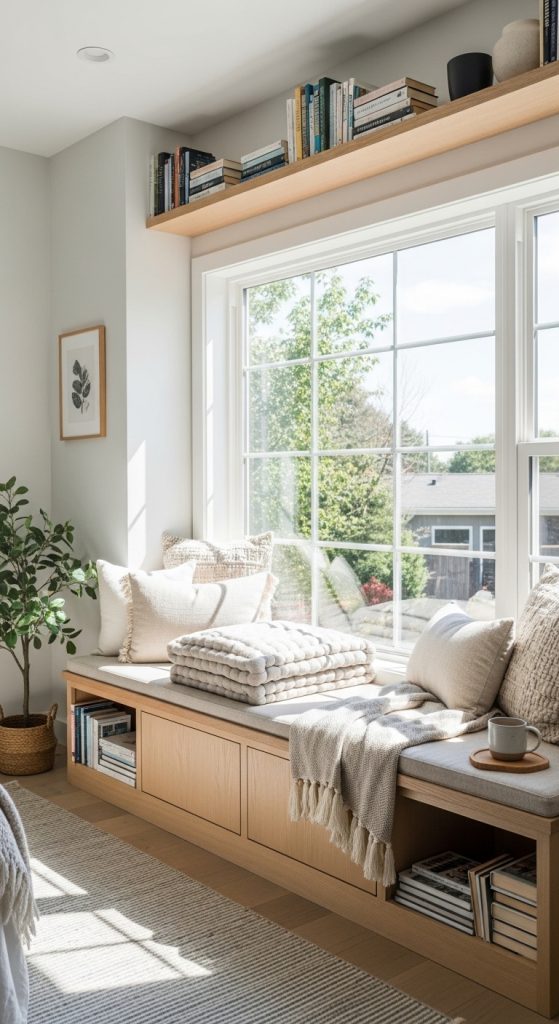
A window bench reading nook is a built-in style setup that uses the natural light directly from a window as the main illumination source. This concept focuses on integrating seating into the architectural structure of the room, usually along a window alcove. The bench becomes a dedicated reading zone that feels connected to the outdoor environment. Soft cushions and layered textiles are used to improve comfort while maintaining a clean aesthetic. This design is widely used in home decor planning because it blends storage, seating, and lighting in one functional unit. It is considered beginner friendly when using prefabricated bench units or simple wooden platforms. The visual effect is calm and structured, making it suitable for modern design and minimalist style interiors.
The placement near a window ensures consistent daylight exposure, which enhances readability and reduces the need for artificial lighting during the day. The layered seating approach allows customization through different cushion thicknesses and fabric textures. This makes the nook adaptable for long reading sessions or short relaxation breaks. The structure also supports organization by incorporating storage beneath the seating area for books and accessories.
To build this setup, a flat bench base is installed along the window wall using wood panels or modular seating units. Cushions are added in multiple layers for comfort, and soft throws complete the aesthetic. Materials include wood boards, upholstery foam, fabric covers, and screws if mounting is required. The step by step process begins with measuring window width, building or placing the bench base, securing it to the wall, and adding cushioning layers. Light filtering curtains may be added to control brightness. Final adjustments include arranging books and decorative elements for a balanced Pinterest inspired reading corner.