Idea 2: Minimalist Seating Arrangement Patio
How to Create
A minimalist seating arrangement focuses on simplicity, clean structure, and functional use of space. This design approach is widely featured in Pinterest ideas because it creates a calm and organized outdoor environment without unnecessary clutter. The concept emphasizes open space, neutral tones, and carefully selected furniture pieces that serve both comfort and practicality. Instead of overcrowding the patio, the focus is on a few essential seating elements arranged in a balanced layout. This creates a modern design feel that is easy to maintain and visually appealing. Minimalist patios are especially suitable for small outdoor areas where efficient use of space is important. The style also supports budget ideas because it reduces the need for excessive decoration and instead focuses on intentional placement of key elements.
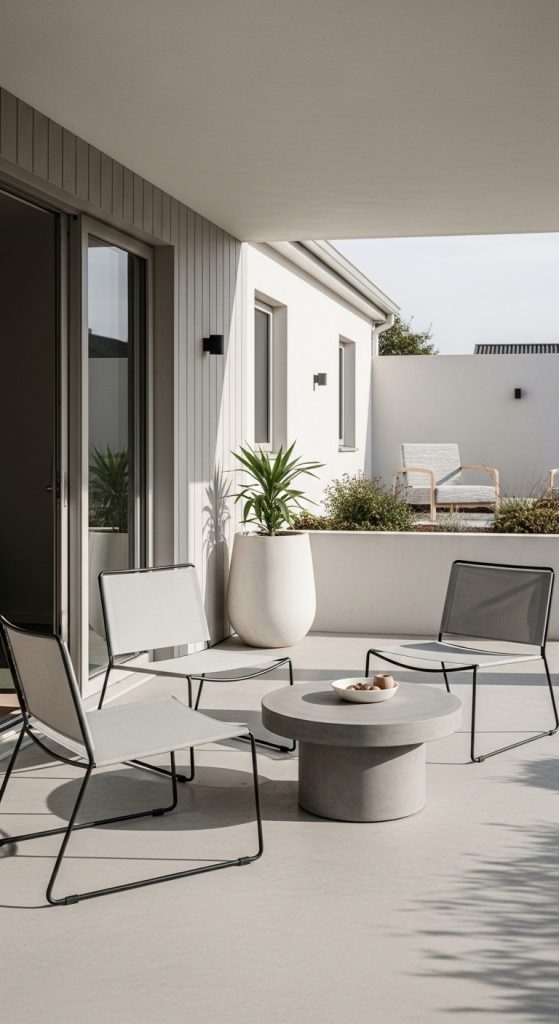
To create this setup, start by selecting simple outdoor seating such as benches, chairs, or low-profile seating options. Arrange them in a way that promotes conversation while maintaining open movement space. The layout should avoid overcrowding corners or pathways. Neutral-colored cushions or plain textiles can be added to enhance comfort without disrupting the minimalist theme. Materials should be weather-resistant to ensure durability. The planning stage involves measuring available space carefully to maintain balance between seating and open areas. The final arrangement should feel structured, calm, and functional, making the patio suitable for relaxation or casual gatherings.
Step-by-Step Guide
The step-by-step process begins with clearing the patio completely to evaluate its natural shape and dimensions. This allows for better planning of seating placement. Once the space is clear, measurements are taken to determine the ideal positioning of each furniture piece. Minimalist design requires precision, so spacing between items should be consistent and intentional. The seating should be placed in a way that allows natural movement without obstruction.
After positioning the furniture, attention is given to alignment and symmetry. The goal is to maintain a visually balanced layout that does not feel crowded. Small decorative additions such as a single table or subtle plant placement can be included, but they should not overpower the simplicity of the design. Final adjustments involve checking comfort and accessibility. The completed setup results in a clean and modern outdoor space that reflects simplicity and functionality while remaining visually appealing and practical for everyday use.