

Attics often hold untapped potential, especially when it comes to storage. Many homeowners overlook these spaces because angled ceilings can make furniture placement and organization tricky. However, with careful planning and creativity, an attic can be transformed into a functional, stylish closet that maximizes every inch of space. From seasonal clothing to shoes, accessories, or even home office supplies, the attic can serve as a versatile storage solution. The key is to adapt your design to the unique shape of the room, working with sloped walls rather than against them.
Designing an attic closet requires both planning and preparation. You need to measure carefully, choose the right materials, and plan storage solutions that fit the slanted spaces. While some designs may involve custom-built shelving or cabinetry, others can be achieved with affordable, ready-made solutions. This blog post will explore ten practical and stylish attic closet ideas for angled ceilings. Each idea includes tips on preparation, materials, and usage so that you can create a storage space that is both functional and visually appealing.
1. Built-In Shelving Along the Short Wall
One of the simplest and most efficient ways to utilize an attic with an angled ceiling is to install built-in shelving along the shorter walls. These shelves can be custom-made to fit the exact dimensions of the sloped ceiling, making full use of otherwise wasted space. Built-ins help keep items organized and prevent clutter from spreading across the floor.
Before installing shelves, measure the height and width of the wall carefully. Consider materials like plywood or MDF for a smooth finish that can be painted to match the room. Adjustable shelves can also be a great option, allowing you to change the height for different items, such as boxes, folded clothes, or shoes. Adding baskets or storage bins enhances organization and keeps smaller items contained.
Built-in shelving works well in attics where floor space is limited because it keeps items off the ground while still making them easily accessible. With a combination of open shelves and cubbies, you can create a versatile storage system tailored to your specific needs. Lighting can also be added under each shelf to make it easier to see items stored in deeper or darker corners.

2. Hanging Rods in the Highest Part of the Ceiling
For attics with a steep slope, the highest part of the ceiling is ideal for hanging clothing rods. Installing rods in this section maximizes vertical space while keeping garments wrinkle-free. This method is especially useful for long dresses, coats, or suits that need to hang freely.
Preparation starts with measuring the highest point of the angled ceiling. Use sturdy brackets or ceiling-mounted hardware to secure the rods safely. Choose rods that can support the weight of your clothing, and consider double rods if the ceiling height allows, one above the other, for shorter garments like shirts and pants.
Materials for this setup typically include metal rods, wooden brackets, and screws that can handle weight. Adding hooks at the ends of the rod or on nearby walls can provide extra space for accessories, scarves, or belts. This solution is efficient because it keeps items visible and accessible while making the most of the highest and often underutilized part of the attic. Proper lighting, such as an overhead LED strip, ensures you can easily find items without straining to see in shadowed areas.

3. Drawers and Cabinets for Low Slopes
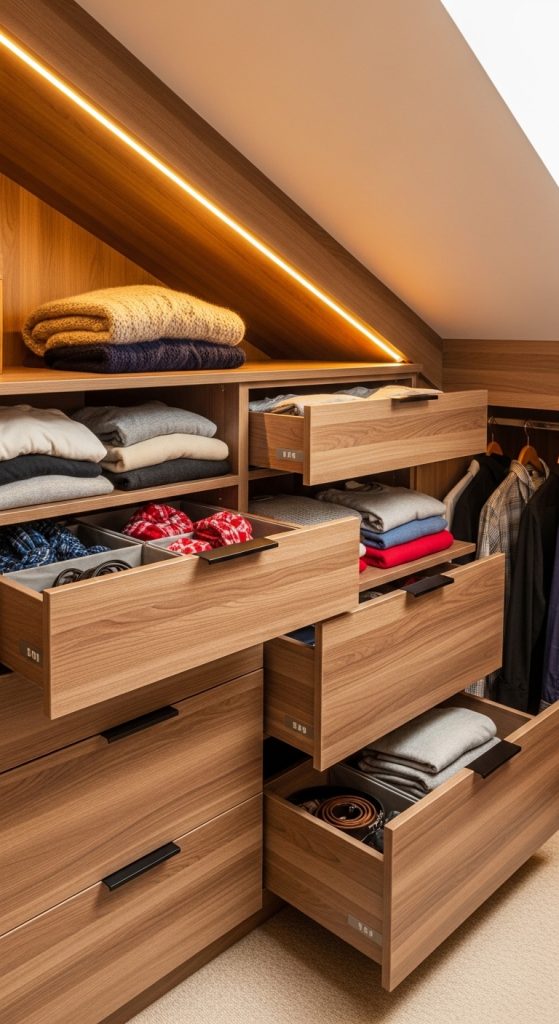
In attic spaces where the ceiling angle is too low for standard closets or hanging rods, drawers and cabinets are an excellent option. These storage units can be custom-built to fit snugly against the sloped walls, turning awkward areas into practical storage.
Begin by measuring the height at different points along the slope. Custom cabinets or drawers can then be designed to maximize the available depth and width. Materials like laminated MDF or solid wood provide durability and a clean appearance. Shallow drawers can be used for accessories, socks, or folded clothing, while deeper drawers can store bulkier items.
One of the advantages of this approach is that it provides hidden storage, keeping the attic neat and organized. Cabinets can also double as seating if you add a cushioned top, making your attic space multi-functional. To enhance usability, install sliding drawers instead of hinged doors, which can be difficult to open in tight areas. Drawer organizers or dividers help categorize smaller items and keep everything easily accessible.
4. Open Cubes and Modular Storage Units
Open cubes and modular storage units are highly flexible solutions for angled attic ceilings. These units can be stacked or arranged in various configurations to fit the slope, providing versatile storage for shoes, bags, and folded clothes.
Before purchasing or building cubes, measure the area and decide how high and deep each unit should be. Modular designs are ideal because they allow you to adjust and reconfigure the storage layout as your needs change. Materials like wood, plastic, or metal offer different aesthetic options while maintaining durability.
Open cubes have the added benefit of visibility, so you can see what is stored without opening drawers or doors. You can add labeled baskets or bins inside each cube to organize smaller items. This type of storage is perfect for attics because it can adapt to irregular shapes. By keeping items off the floor, you reduce clutter and make the space easier to navigate. Lighting can be installed above or inside the cubes to illuminate darker corners.

5. Sliding Doors or Curtains to Hide Storage
In attics with irregular or angled walls, traditional hinged doors may not be practical. Instead, sliding doors or curtains can provide a functional and attractive way to conceal storage while saving space.
Sliding doors can be custom-built to fit the slope and can be made of wood, laminate, or even frosted glass for a modern look. Curtains offer an even simpler solution and can be changed easily if you want to update the color or fabric. When using curtains, make sure to install a sturdy rod or track that follows the angle of the ceiling.
This approach works well in attics where the storage area includes shelves, drawers, or hanging rods. By hiding the storage, you maintain a clean and organized appearance, even in small or awkward spaces. Additionally, sliding doors or curtains prevent dust from accumulating on stored items and give the attic a more finished look. Choose light-colored materials to enhance the sense of space in areas with lower ceilings.

6. Under-Eaves Storage Solutions
The area directly under the eaves is often the most challenging part of an attic to use effectively. Custom under-eaves storage solutions turn these tight spaces into functional areas for seasonal items, shoes, or extra linens.
Measure the height and depth under the eaves carefully to ensure a snug fit for cabinets, drawers, or open shelves. Low-profile furniture works best, and sliding drawers or pull-out bins make access easier in these tight spaces. Materials like lightweight wood or MDF can be painted to blend with the walls, giving a seamless appearance.
Under-eaves storage is ideal for items you do not need to access daily, as the low height may make frequent retrieval slightly inconvenient. Adding pull-out baskets, labels, or dividers ensures that items remain organized and easy to find. Lighting, such as LED strips along the edge, can brighten the area and make the space more user-friendly. This approach maximizes storage without taking away usable floor space in the attic.

7. Corner Closet Units
Attics with angled ceilings often have awkward corners that are difficult to use. Corner closet units are designed to fit into these spaces, providing practical storage without wasting any area.
Corner units can include a combination of hanging rods, shelves, and drawers. Measure the width and height of the corner carefully and select units that fit snugly into the angle. Custom-built options are ideal, but pre-made modular corner units can also work if they match the slope of your ceiling. Materials like wood, laminate, or metal can be chosen based on durability and style preferences.
These units make efficient use of corners that might otherwise be ignored, giving you extra storage for clothes, accessories, or small household items. Adding pull-out drawers or rotating shelves can increase accessibility in tight corners. With proper lighting and thoughtful organization, corner closet units transform awkward spaces into highly functional storage areas.

8. Loft-Style Hanging and Storage
In attics with high peaks, you can create a loft-style closet system that combines hanging rods with overhead shelves. This approach maximizes vertical space and allows you to store seasonal clothing, bedding, or bulky items above eye level.
Begin by measuring the height from floor to ceiling at the peak and determine how many rods and shelves you can safely install. Use strong materials such as metal rods and wooden shelves to support heavy items. Incorporate ladders or step stools to reach higher storage areas safely.
This setup works well in attics that are deep and have high ceilings. It allows you to separate items by frequency of use, keeping daily clothing within easy reach and seasonal items above. Proper lighting and clear labeling of bins or boxes ensure the loft system remains organized. This style is visually appealing and gives a sense of order to even the largest attic spaces.

9. Pull-Out Storage Drawers for Shoes and Accessories
For attics where floor space is limited, pull-out storage drawers are ideal for organizing shoes, accessories, and small clothing items. These drawers can be designed to fit under shelves, sloped ceilings, or even within custom cabinets.
Measure the available width and depth to ensure the drawers fit the space properly. Sliding mechanisms should be sturdy and smooth to allow easy access. Materials like MDF, plywood, or lightweight wood are suitable for drawers, with dividers added to separate items like shoes, belts, or scarves.
Pull-out drawers save space while keeping items visible and accessible. They work particularly well in attics with low ceilings, where hanging rods may not fit. To enhance usability, label each drawer and consider adding soft-close mechanisms to reduce noise and wear. This method keeps small items organized and prevents clutter from accumulating on floors or shelves.

10. Integrated Lighting and Mirrors for Functionality
A functional attic closet is incomplete without proper lighting and mirrors. Good lighting ensures you can see everything stored in angled spaces, while mirrors provide a practical way to try on outfits without leaving the attic.
LED strip lights, recessed lighting, or battery-operated puck lights work well for angled ceilings. Position lights along shelves, rods, or inside cabinets for maximum visibility. Mirrors can be wall-mounted, placed on doors, or integrated into drawers to save space. Materials like lightweight acrylic or frameless glass mirrors minimize the impact on sloped areas.
Integrated lighting and mirrors increase usability and comfort in attic closets. Proper illumination prevents accidents in tight spaces and makes the area feel larger and more open. Reflective surfaces also enhance natural light, brightening darker corners. By combining practical storage with functional lighting and mirrors, you can create a closet that is not only organized but enjoyable to use every day.
